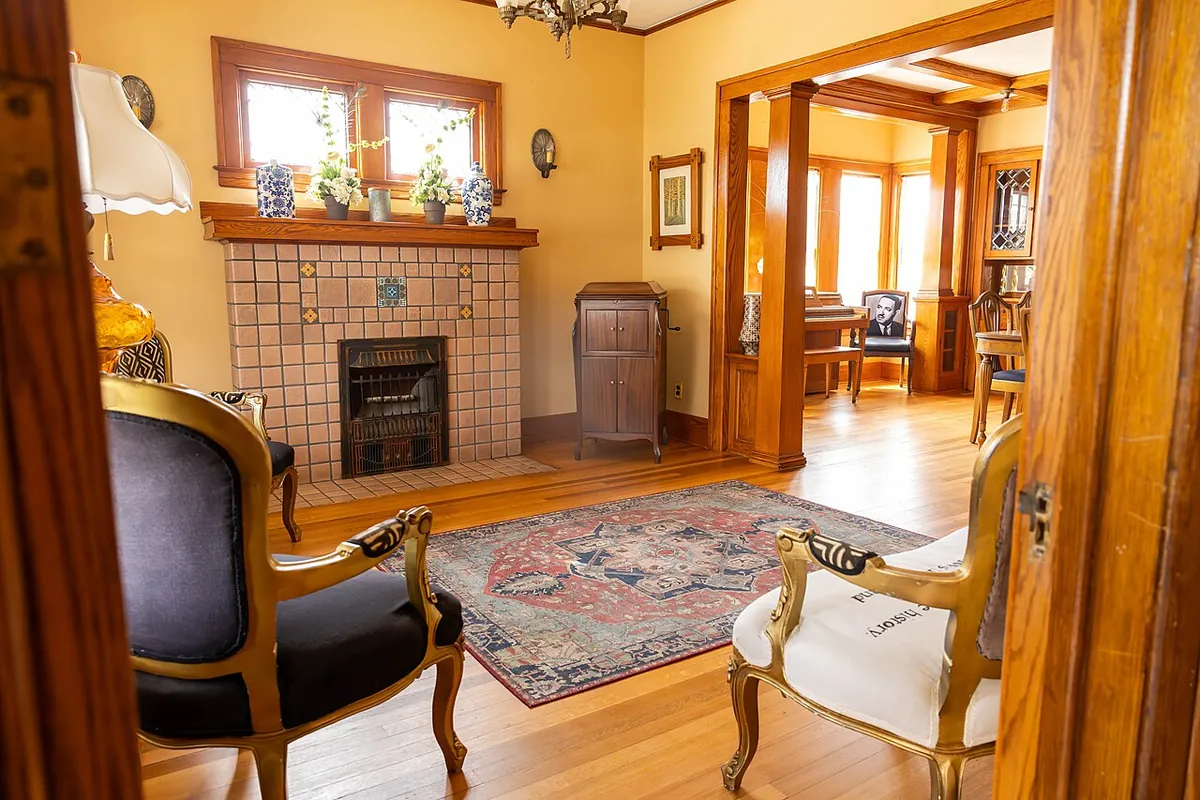
Where historic homes come up short
Old Town Alexandria, the Fan and Church Hill in Richmond, Ghent in Norfolk, downtown Fredericksburg, Staunton, Lexington and Williamsburg-area neighborhoods are full of homes built with materials that modern estimates don’t price well. A historic home insurance appraisal focuses on what “like kind and quality” means for that house.
- Plaster on lath priced as drywall, or patched where the repair needs skilled plasterers.
- Heart pine and wide-plank floors that can’t be matched with stock lumber.
- Slate, standing-seam tin and cedar roofs priced as asphalt shingles.
- Custom millwork: crown, casings, mantels and stair parts that need a millwork shop.
- Wavy glass and wood windows where vinyl replacements change the home’s character.
Historic district rules and your policy
Many Virginia localities have architectural review boards that must approve exterior changes in historic districts. If the board requires slate instead of shingles or wood windows instead of vinyl, that extra cost may fall under your policy’s ordinance-or-law coverage, which usually has its own limit. We read that coverage before we price the work so the estimate matches what the policy can actually pay.
Our approach
We document existing materials before they’re torn out, get pricing from trades who actually do historic work, and explain the difference between restoring a feature and replacing it with something modern. Panels respond to specifics such as the species, profile and installation method, not adjectives like “historic” or “unique.”
Not just museum houses
A 1920s brick foursquare in Roanoke or a 1910 Hilton Village cottage in Newport News raises the same questions. Age and materials matter more than a historic plaque.
Questions about historic home claim appraisal
Does replacement cost mean I get original materials?
Most policies promise materials of like kind and quality, not exact replicas. For plaster, slate and heart pine, the like-kind standard often supports traditional materials. The policy wording and facts decide.
My home is in a historic district. Does that raise the payout?
Not automatically. Extra costs required by a review board are often paid under ordinance-or-law coverage, subject to its limit.