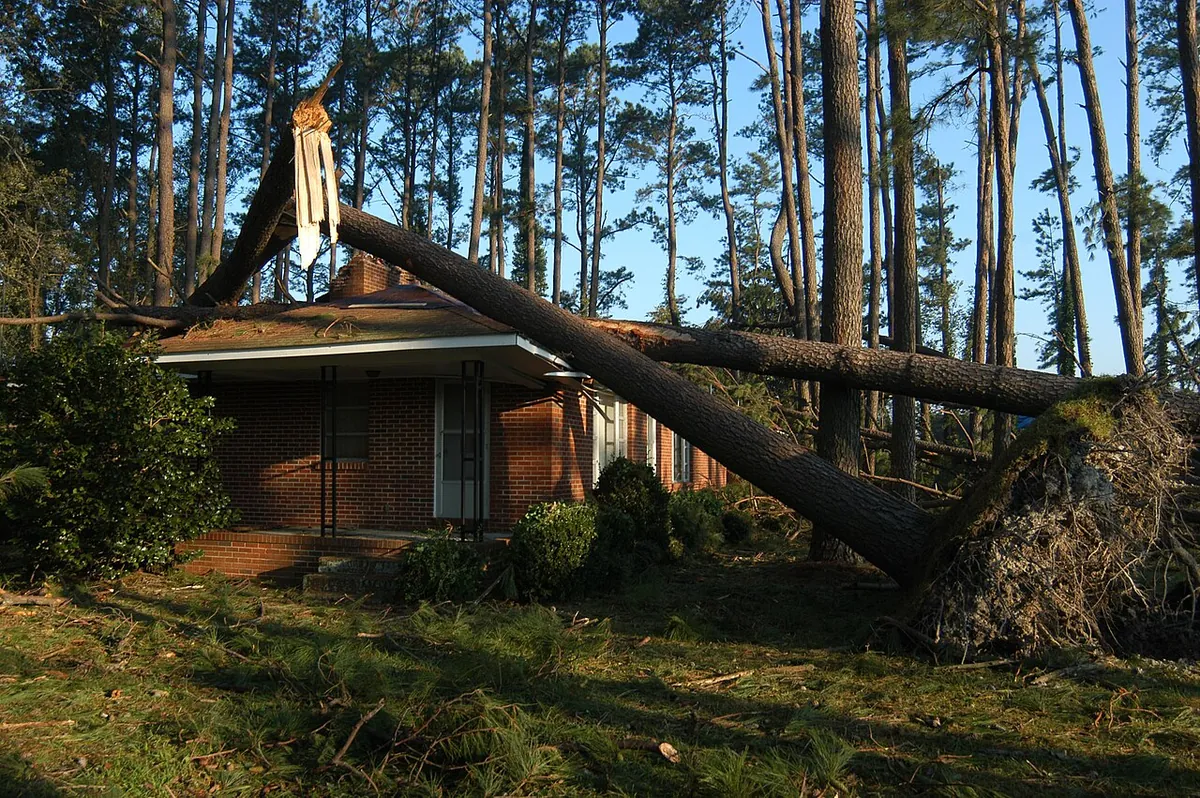
Why Virginia sees so many tree claims
Roughly 60 percent of Virginia is forested, and older neighborhoods from Arlington to Roanoke sit under mature hardwood canopies. Trees fail in derechos, in tropical storms after days of rain, and in ice storms that coat limbs in a half-inch or more of glaze. Southwest Virginia and the Piedmont see damaging ice most winters, and a wet hurricane remnant can topple shallow-rooted pines across Hampton Roads.
What a fallen tree damage appraisal includes
- Removal from the structure. Crane rental, climbing crews and rigging to lift a trunk off a roof without causing more damage. This is usually covered as part of the dwelling repair, not just debris removal.
- Framing and roof repair. Broken rafters, cracked ridge beams, damaged sheathing and interior ceilings below the impact.
- Collateral damage. Gutters, decks, fences, HVAC units, vehicles (under auto coverage) and landscaping where the policy includes it.
- Interior water through the opening before it was tarped.
Debris removal and tree limits
Many homeowners policies pay to remove a fallen tree only when it damages a covered structure or blocks a driveway or ramp, often with a cap such as $500 per tree and $1,000 per loss. Removal of the trunk from the house is often treated separately from hauling the wood away. Use our fallen tree claim splitter to see how those limits affect a claim.
The neighbor’s tree
If a healthy tree from a neighbor’s yard falls on your house in a storm, your own policy usually pays, regardless of who owned the tree. A claim against the neighbor generally depends on whether they knew or should have known the tree was dangerous.
Questions about fallen tree & ice storm appraisal
Is crane work covered in a fallen tree damage appraisal?
When a tree must be lifted off the house to make repairs, crane and rigging costs are generally part of repairing the dwelling. Removal from the yard is a separate, usually limited, item.
What about trees that fell but didn’t hit anything?
Most policies don’t pay to remove a tree that damaged nothing covered, unless it blocks a driveway or ramp under specific policy language.