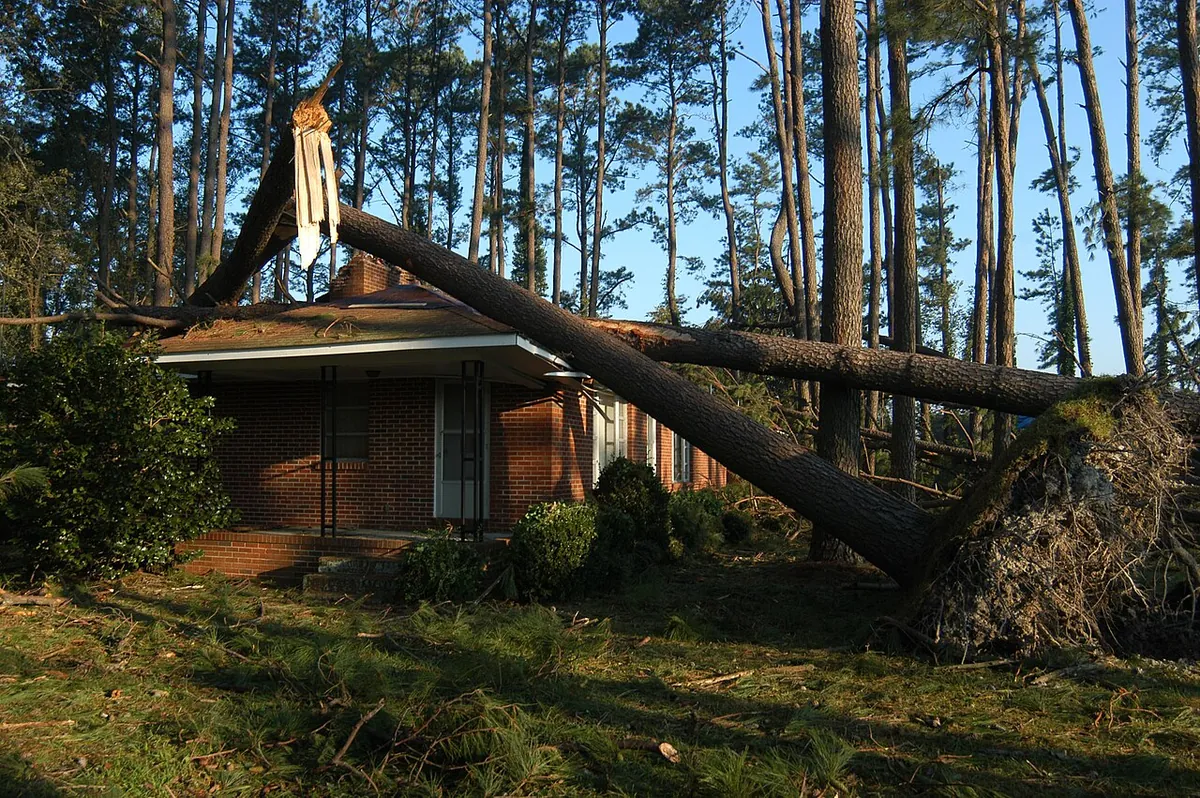
How the fallen tree insurance calculator works
Many homeowners policies treat a tree claim as two different things. Repairing the house, including lifting the tree off it, is part of the dwelling claim. Cutting and hauling the tree away is debris removal, often limited to something like $500 per tree and $1,000 per loss, and only for trees that hit a covered structure or block a driveway or ramp. This tool applies those limits so you can see the split.
Example (illustrative)
With the default figures, the crane and structural repair are paid as dwelling repair less the deductible. Two trees qualify for removal coverage, but the $1,000 per-loss cap applies. The two trees that hit nothing aren’t covered for removal at all.
Check your own policy
- Find the “Trees, shrubs and other plants” and “Debris removal” sections in your policy.
- Note the per-tree and per-loss limits and which perils they apply to.
- Ask whether crane and lift-off costs were included in the dwelling estimate.
For a disputed tree claim, see our fallen tree damage appraisal service.
Questions about this tool
Are the default limits right for my policy?
They’re common figures, not universal ones. Replace them with the limits in your policy before relying on the result.
Does the deductible apply to tree removal too?
Usually one deductible applies to the whole loss. This tool subtracts it once from the combined covered amount.